
 0333 335 5172
 request@qeeper.co.uk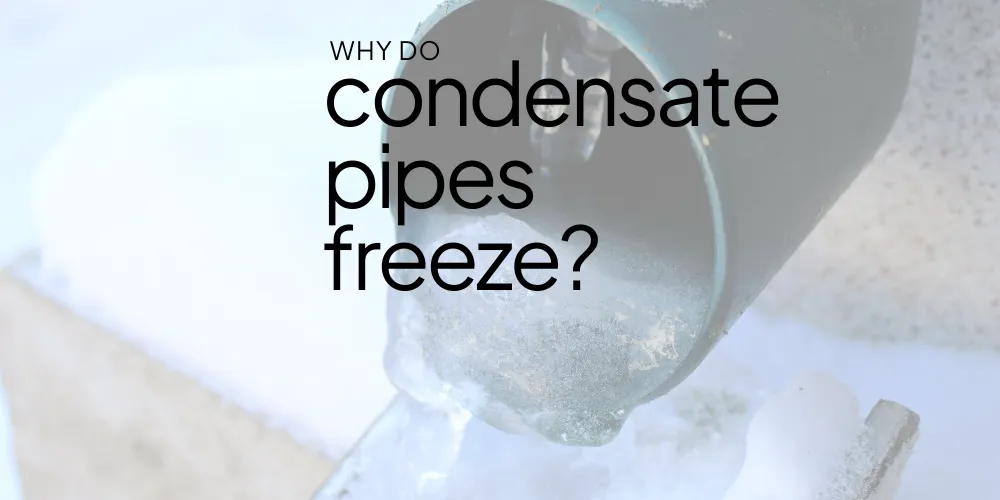


Frozen condensate pipes are one of the most common winter boiler problems across the UK, causing thousands of emergency callouts during cold snaps. In London, where many properties have external condensate pipe runs to rear gardens or shared drainage areas, sub-zero temperatures can freeze these pipes overnight, leaving entire households without heating or hot water.
Understanding what condensate pipes do, why they freeze, and how to safely thaw them helps you restore heating quickly without expensive emergency engineer visits. This guide explains everything London homeowners and landlords need to know about condensate pipe freezing, from recognising the symptoms to preventing future problems through proper insulation and installation.
A condensate pipe carries acidic wastewater from your boiler to a drain, and it can freeze in cold weather if exposed outside.

Modern condensing boilers extract more heat from burning gas than older models by cooling exhaust gases until water vapour condenses into liquid. This process dramatically improves efficiency—condensing boilers achieve 90% efficiency compared to 70% for older atmospheric models. However, this condensation creates acidic wastewater that must drain away safely.
The condensate pipe carries this wastewater from your boiler to a suitable drainage point—typically an outside drain, soil pipe, or internal waste connection. The liquid contains small amounts of carbonic acid formed when carbon dioxide dissolves in water during condensation. While not dangerous, it requires proper drainage and cannot simply be released anywhere.
External pipework becomes vulnerable during cold weather. Condensate flows slowly and intermittently rather than continuously like normal plumbing. Between boiler firing cycles, condensate sits stationary in the pipe. When ambient temperature drops below freezing, this stationary water freezes solid, blocking the pipe and preventing further drainage.
London properties present particular challenges. Many flats and terraced houses have boilers mounted on internal walls with condensate pipes running through the property to external drainage at the rear. These pipe runs can extend several metres, increasing the exposed length vulnerable to freezing. Flats with boilers in kitchens often have condensate pipes running down external walls to shared drainage areas, creating extensive exposure to cold air.
The problem worsens with smaller diameter pipes. Early condensing boiler installations sometimes used 21.5mm (¾ inch) overflow pipe—the minimum permissible diameter. These narrow pipes freeze more readily than wider ones because they contain less water volume and have greater surface area relative to volume. Current best practice recommends 32mm pipe minimum for external runs, significantly improving freeze resistance.
Signs include a boiler fault code, gurgling noises, and your heating or hot water suddenly stopping during cold weather.
- The most definitive indicator is timing—your heating worked fine yesterday, temperatures dropped overnight, and this morning your boiler won’t fire. This pattern during sub-zero weather strongly suggests condensate pipe freezing rather than component failure.
- Boiler fault codes provide additional confirmation. Common UK boiler error codes for condensate blockage include EA, E0, 29, 133, F28, or F29, though exact codes vary by manufacturer. Your boiler manual lists codes and meanings, but any fault code appearing during freezing weather alongside stopped heating warrants checking the condensate pipe.
The boiler enters safety lockout when the pipe freezes. You’ll see the display show an error code, and pressing reset has no effect—the boiler attempts to start, detects the problem immediately, and shuts down again. This lockout protects internal components from damage that backing-up condensate could cause.
- Gurgling or bubbling noises from the boiler before lockout indicate condensate struggling to drain. These sounds suggest the pipe is partially blocked or draining slowly—often a warning that complete freezing is imminent.
- Visible ice on external pipework confirms freezing. If you can access the condensate pipe outside—look for white plastic pipe, typically 21.5mm to 32mm diameter, running from your boiler to a drain—check for frost or ice accumulation. The frozen section might show as a bulge where ice has expanded, or the entire visible run might be frost-covered.
Distinguishing condensate freezing from other winter boiler problems matters for correct response. Low system pressure shows on the boiler’s pressure gauge and requires repressurising rather than pipe thawing. Gas supply problems affect multiple properties and need reporting to your gas supplier. Component failures like ignition problems or pump failures aren’t temperature-related and need professional diagnosis. If your boiler shows other symptoms beyond simple lockout during freezing weather, professional assessment is appropriate.
When frozen, condensate water backs up inside the boiler, triggering a safety shutdown to prevent damage.
The boiler continues producing condensate whenever it fires. With nowhere for this water to go, pressure builds in the condensate trap—a U-bend inside the boiler that prevents combustion gases escaping down the drain pipe. Rising water level in the trap triggers a safety sensor, usually a pressure switch or float switch, that signals the boiler’s PCB to shut down immediately.
This safety lockout prevents several potential problems. Continued condensate production with blocked drainage could overflow the trap, spilling acidic water inside the boiler casing onto electrical components and causing corrosion or short circuits. Pressure buildup could force water past seals into the combustion chamber, potentially causing damage or preventing safe ignition. The lockout protects your boiler from these scenarios.
The issue is almost always external pipe freezing rather than internal boiler problems. The boiler itself sits in a heated room where internal components never reach freezing temperatures. Only the external pipe run experiences sub-zero conditions. This is reassuring—the problem is external, accessible, and usually manageable without professional intervention.
Once the blockage clears and condensate drains freely again, the safety sensor resets. You can then restart the boiler normally, and heating resumes immediately. This quick recovery distinguishes condensate freezing from component failures requiring parts or professional repair.
Turn off your boiler and safely thaw the pipe using warm water, avoiding boiling water or open flames.

Step-by-step safe thawing process:
- Turn off your boiler to prevent it attempting to fire while you work
- Locate the frozen section by following the white condensate pipe from your boiler to the outside drain—look for frost, ice, or visible bulging
- Prepare warm water by mixing boiling kettle water with cold tap water to achieve hand-hot temperature (around 40°C)—test it’s comfortably warm, not scalding
- Protect the area by placing towels or containers below the pipe to catch water runoff and prevent ice forming on paths
- Pour warm water slowly along the frozen pipe section, starting at the boiler end and working towards the drain
- Continue gradually until you hear water flowing freely through the pipe or see drainage at the outlet
- Wait several minutes for internal ice to melt completely
- Reset your boiler following manufacturer instructions—usually a reset button held for 3-5 seconds
- Monitor operation for 10-15 minutes to confirm normal heating resumes
Critical safety warnings:
- Never use boiling water directly on plastic pipes—rapid temperature change can crack or split the pipe, creating leaks
- Never use open flames, blowtorches, or heat guns—these can melt pipes, cause burns, or create fire hazards
- Never attempt to force mechanical thawing with tools—you’ll damage the pipe
- Ensure adequate ventilation if working near gas supplies
- Watch for slippery conditions from water spillage during freezing weather
Most frozen condensate pipes respond to this treatment within 15-30 minutes. If thawing doesn’t restore heating, the blockage might be more extensive, the pipe may be damaged, or a different fault exists requiring professional diagnosis.
Insulating exposed pipework and shortening external runs can significantly reduce the risk of freezing.
Effective prevention measures:
- Pipe insulation: Foam pipe insulation sleeves designed for heating pipes also work for condensate pipes. Wrap all external pipe runs with appropriate thickness insulation—minimum 19mm for 21.5mm pipe, preferably 25mm or thicker. Secure insulation with cable ties at intervals to prevent slipping. Replace any damaged or degraded insulation before winter.
- Increase pipe diameter: If your installation uses 21.5mm overflow pipe for the condensate run, consider upgrading to 32mm during boiler servicing. Wider pipes contain more water volume that takes longer to freeze and provide better flow characteristics reducing freeze risk. Current Building Regulations guidance recommends 32mm minimum for external condensate runs.
- Minimise external routing: The less pipe exposed to cold air, the better. During boiler replacement or major work, engineers can often reroute condensate to internal drainage—connecting to kitchen waste pipes, bathroom soil stacks, or internal drains. While this requires more complex plumbing, it eliminates external freeze risk entirely.
- Improve pipe gradient: Condensate pipes should fall continuously from boiler to drain at minimum 2.5° (44mm per metre run). Better gradient means faster drainage with less stationary water sitting in pipes between firing cycles. Poor gradient creates low points where water pools and freezes first.
- Trace heating: For persistently problematic locations, electric trace heating cables can be installed along external pipe runs. These low-wattage heating elements prevent freezing but require electrical supply and professional installation.
- London property considerations: Flats present particular challenges for pipe rerouting due to shared drainage and building regulations. Consult your freeholder or managing agent before modifying external drainage. Some conversions prohibit external alterations, limiting options to insulation improvements.
Professional installers assess your specific property layout and recommend the most appropriate preventative measures during annual servicing or boiler replacement. Investment in proper prevention eliminates the inconvenience and repeated emergency callouts that persistent freezing causes.
It is usually not dangerous but can stop your heating; improper thawing methods can create safety risks.
Condensate pipe freezing itself presents minimal danger. The boiler’s safety systems prevent any unsafe operation, and the frozen pipe merely blocks drainage without creating gas leaks, carbon monoxide risks, or fire hazards. You’re inconvenienced by lost heating but not endangered by the freezing itself.
However, improper thawing creates real risks. Using boiling water can crack plastic pipes, causing leaks that damage property or create slip hazards on paths and stairs. Open flames or blowtorches present obvious fire risks and can release toxic fumes from melting plastic. These unsafe thawing methods cause more problems than the original freezing.
Persistent freezing every winter indicates installation problems requiring professional correction. A properly designed and installed condensate drainage system should resist freezing in typical UK winter conditions. Repeated annual freezing suggests inadequate pipe sizing, poor insulation, excessive external routing, or insufficient gradient. These design issues won’t improve spontaneously—professional modification is necessary.
Landlords have specific maintenance responsibilities. Under the Landlord and Tenant Act 1985 and the Homes (Fitness for Human Habitation) Act 2018, landlords must maintain heating installations in good working order. This includes ensuring condensate drainage is properly designed and insulated to function throughout winter. Tenants shouldn’t need to repeatedly thaw frozen pipes—the installation should prevent freezing occurring.
If you’re thawing condensate pipes multiple times each winter, the installation needs improvement. This might involve pipe rerouting, diameter increase, better insulation, or gradient correction. These modifications require professional assessment and implementation to ensure compliance with Building Regulations and Gas Safety requirements.
Call a Gas Safe engineer if thawing doesn’t restore heating or freezing keeps happening each winter.
Situations requiring professional attention:
- Thawing the pipe doesn’t restore boiler operation after 30 minutes
- You cannot locate the frozen section or access it safely
- The condensate pipe is damaged, cracked, or leaking
- Freezing recurs within days despite thawing
- Your boiler shows different error codes or symptoms beyond simple lockout
- The condensate pipe freezes every winter requiring repeated intervention
Gas Safe engineers diagnose whether freezing results from installation design issues or simply unusually severe weather. They can reroute pipes to internal drainage, increase pipe diameter, improve insulation, or adjust gradients to meet current best practice standards. These permanent solutions eliminate recurring freezing problems.
Annual boiler servicing provides opportunity to assess condensate drainage before winter. Engineers check pipe routing, insulation condition, gradient adequacy, and drainage function. They identify potential freeze risks and recommend preventative improvements, helping you avoid midwinter emergency callouts.
For professional condensate pipe assessment, modification, and reliable boiler servicing across all London boroughs, Qeeper’s heating and gas services provide expert solutions from Gas Safe registered engineers. We diagnose persistent freezing problems, implement effective permanent fixes, and ensure your heating operates reliably throughout winter.